

Lots of factors can affect someone’s glucose levels and time in range—including food. But why do different foods affect people with diabetes in different ways? And why do the same foods have different effects on glucose levels (blood sugar) depending on the day? It might have something to do with the food’s glycemic index.
What is the glycemic index?
Foods are composed of three major macronutrient groups: carbohydrates, fats, and proteins. Carbohydrates break down into sugars during digestion, which makes them top of mind for most people with diabetes when managing glucose levels during a meal.
Glycemic index is a number used to describe how quickly the sugars in different foods break down and enter the bloodstream. It’s calculated by comparing how quickly a food raises glucose levels compared to straight glucose (a spoonful of sugar). A higher glycemic index means sugars will reach the blood faster (and therefore raise your glucose levels more quickly). A lower glycemic index means the sugars reach the blood more slowly.
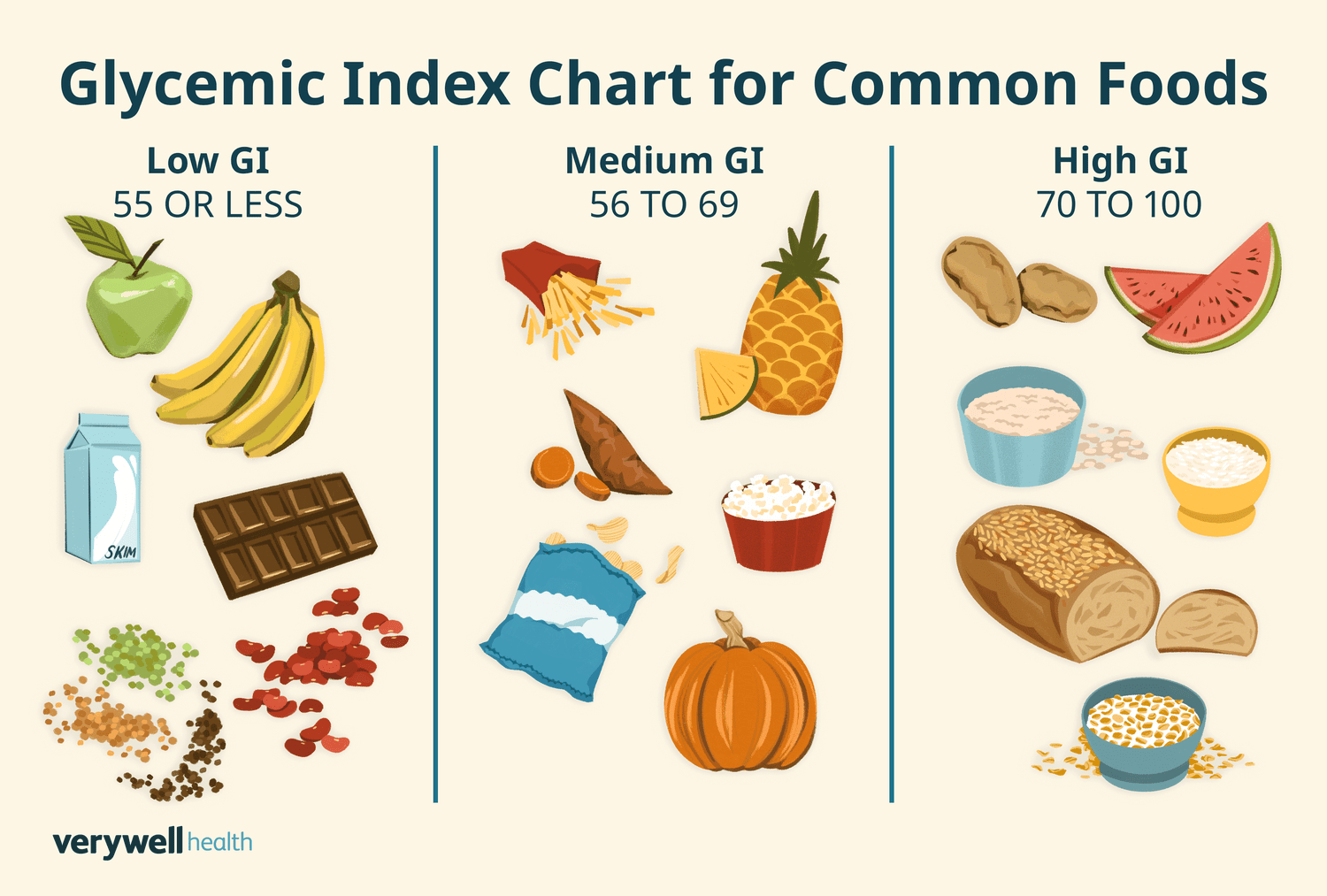
Understanding the glycemic index can be a helpful factor to consider if you’re looking to fine-tune your time in range–but it can be more complicated than just carb counts.
How fats affect glucose
Fats slow down the digestive process known as gastric emptying, or how quickly food can move from your stomach to the small intestine, where carbs are absorbed into the bloodstream. The result? Fats lower the glycemic index of foods or slow down how quickly blood sugar may spike.
Fat-rich foods, like nuts or avocados, are going to have a much lower glycemic index than something like rice or apples, which have no fat when eaten alone. Fats combine with other foods in your meal and help balance the effects of higher-glycemic foods. If you’ve ever noticed that pairing an apple with cheese for a snack lowers the glucose level spike and helps you feel full longer, this helps explain why.
But what about those pesky delayed high glucose levels (hyperglycemia)? Fats slow the rate at which carbohydrates enter the blood, lessening the initial post-meal spike. Because foods are moving through your system more slowly, it draws out the length of time it takes those carbs to fully absorb into your blood, so you might see a longer-lasting but less dramatic spike.
How protein affects glucose
Much like fats, proteins slow down how quickly foods move through your digestive system. The results are similar: foods that contain some protein will have a lower glycemic index. Adding protein-rich foods to a meal will help balance out higher glycemic foods, slow down digestion, and lessen initial glucose level spikes. Much like fats, protein could potentially be the reason for higher glucose levels an hour or two after eating.
How fiber affects glucose
Fiber is a group of carbohydrates that we cannot digest or absorb nutrients from, but still get many benefits from eating. Fiber adds bulk to food and slows down digestion. Foods that contain more fiber are going to have a lower glycemic index. Adding fiber-rich foods to meals can help lessen blood sugar spikes.
If you’re looking for simple swaps to make during meals to decrease spikes, adding in more high-fiber vegetables or whole grains can be an easy place to start.
How food preparation affects glucose
We often talk about what we eat, but we don’t always talk about how we eat it. Cooking methods can have a big impact on glycemic index and how quickly foods may spike your glucose levels.
There’s no one-size-fits-all rule here because not all cooking methods are created equal. For example, lightly boiling or steaming can form resistant starches, a type of fiber, which lowers the glycemic index. When it comes to boiling pasta, however, longer cook times will break the starches down and raise the glycemic index. Baking or roasting can also break carbohydrates down, raising the glycemic index. Cooling carbohydrates like rice, potatoes, or pasta after they’ve been cooked can allow resistant starches to form and lower the glycemic index again.
Some people with diabetes use the Warsaw method calculator to help dose their insulin to account for glycemic index foods. Speak with your healthcare team to see if this would work for you!
How CGM metrics can help
The science behind glycemic index can get complicated, but doing your own experiments is a great way to figure out what works best for you. Did that leftover rice (cooled and then reheated) cause the same spike as the fresh rice the night before?
Using a CGM to understand how these foods affect you can help you feel empowered and help improve your diabetes management. By using CGM metrics like time in range to analyze patterns like your glucose levels 2 hours, 4 hours, and 6 hours after you eat a certain food, you can learn what treatments can help you best! For some, it might look like more insulin, for others it might look like a walk after eating a particularly fatty meal.
Everyone’s diabetes is different and everyone’s body reacts to things differently. Understanding your body can make a world of difference.
Learn how to get started with CGM and time in range today!